
Breaking: The Industrialization of Rental Fraud - 2026 Analysis
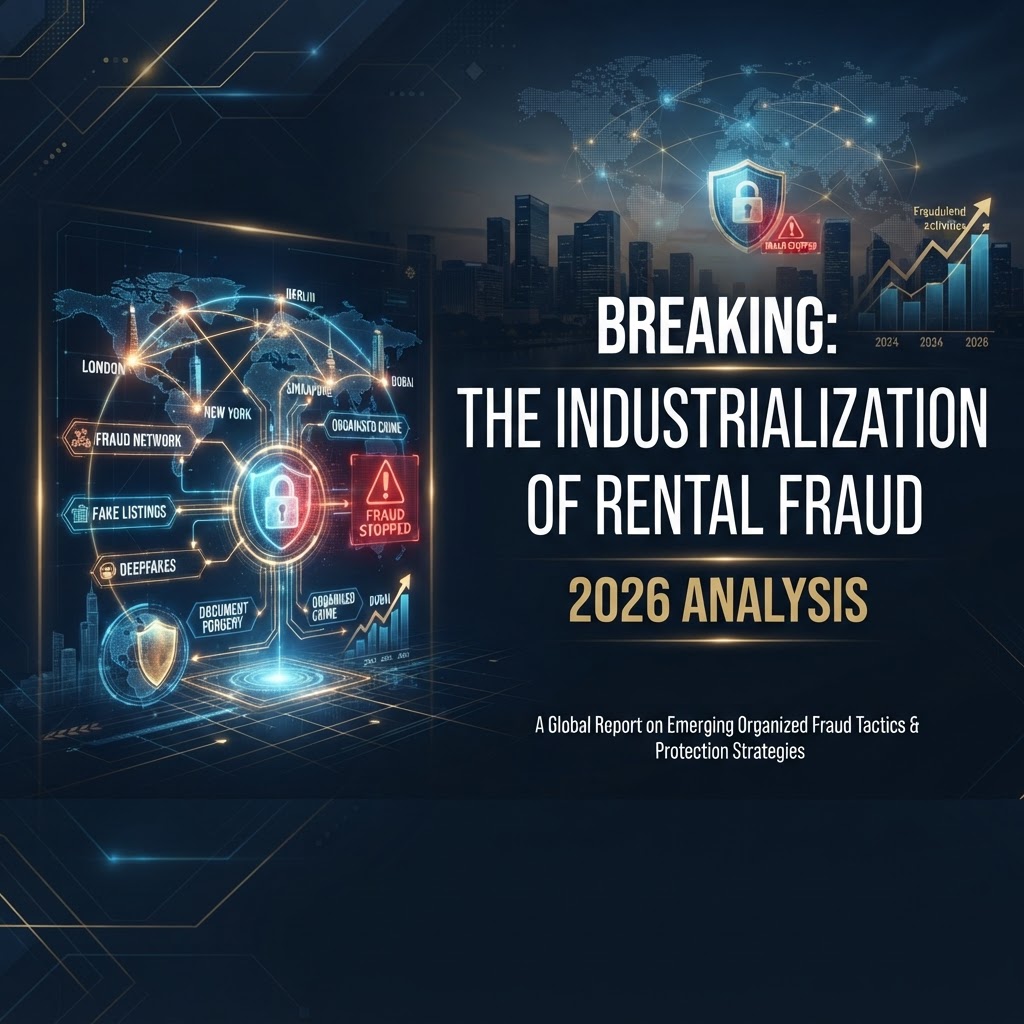
Executive Summary
Rental application fraud has evolved from isolated incidents into a sophisticated, industrialized criminal enterprise, with 93.3% of apartment owners and managers reporting fraud in the past year (Source: National Multifamily Housing Council). As AI-generated document forgery becomes cheaper and more accessible, traditional manual screening methods are failing, leaving property owners vulnerable to significant bad debt and eviction risks. This report examines the 2026 landscape of rental fraud and provides actionable strategies for modern property protection.
The Rise of Industrialized Rental Fraud
In 2026, the barrier to entry for committing rental fraud has effectively vanished, as social media platforms and specialized software allow bad actors to purchase 'fraud kits' for as little as $300 to $1,000 (Source: Docuverus). These kits include doctored bank statements, fake pay stubs, and synthetic credit profiles that are specifically designed to pass visual inspections by leasing teams.
AI-Driven Document Falsification: AI-generated document fraud jumped 500% in 2025 alone, rendering manual review processes largely obsolete (Source: RL Property Management).
The Failure of Traditional Screening: Standard credit checks only confirm that a score belongs to a file; they do not verify that the human presenting the identity is the actual owner, allowing serial fraudsters to operate across dozens of properties undetected (Source: Docuverus).

This image illustrates the invisible threat facing property managers today. While a document may look perfect on a screen, the metadata and underlying verification signals often reveal a different story. Relying on visual inspection is no longer a viable security strategy in an era where generative AI can create convincing, yet entirely fabricated, financial histories in minutes.
Why Manual Reviews Are Failing
Leasing teams are currently facing a 'verification gap' where the speed of fraud creation outpaces the speed of manual verification. According to recent data, fraud detection rates have plummeted from 90% to 75% post-pandemic, meaning more fraudulent applicants are successfully securing leases than ever before (Source: RL Property Management).
The 1-in-8 Reality: Approximately 1 in 8 rental applications now contains some form of fraud, ranging from forged income documents to synthetic identities (Source: Multifamily Executive).
Market Disparities: While national fraud rates have seen slight fluctuations, specific markets like Memphis, Atlanta, and Houston continue to see fraud rates significantly higher than the national average, requiring localized, high-intensity screening protocols (Source: Multi-Housing News).
The Technology Shift: Moving Beyond Credit Scores
To combat this, the industry is shifting toward AI-powered verification platforms that decode fragmented data. Companies like Checkr are now integrating identity, background, and credential verification into single platforms to provide a more complete picture of an applicant (Source: Checkr).
Real-Time Verification: Modern proptech solutions are replacing manual screening with real-time identity and income verification, which is essential for catching fraud at the point of application rather than during the eviction process (Source: Commercial Observer).
Metadata Analysis: Advanced systems now look beyond the visual appearance of a document to analyze its metadata, ensuring that the file was not created or altered by common generative AI tools (Source: Docuverus).

As shown above, the future of rental security lies in hardware and software integration. By moving away from static document submission and toward dynamic, real-time verification, landlords can significantly reduce their exposure to bad debt, which reached $156.7 million in avoided losses for some sectors in 2024 (Source: Multi-Housing News).
Protecting Your Assets in 2026
Landlords must adopt a 'zero-trust' approach to applicant screening. This means verifying the source of every document and utilizing third-party platforms that specialize in detecting synthetic identities and AI-forged financial records.
Key Strategy: Always authenticate documents rather than just reviewing them. Real documents carry digital footprints that forged ones lack.
Operational Impact: By investing in automated fraud detection, property managers can close the gap between fraud attempts and actual caught incidents, as evidenced by the $8.07 million in bad debt avoided by firms using advanced screening in Q2 2026 alone (Source: Docuverus).
Key Takeaways
- Rental fraud is now an industrialized, AI-powered threat with 93.3% of operators reporting incidents in the last year.
- Manual visual inspections are no longer sufficient; AI-generated documents are designed to bypass human review.
- Property managers should prioritize real-time identity and income verification platforms to catch fraud at the point of application.
- Implementing advanced screening technology is a direct investment in reducing bad debt and protecting long-term asset value.
Tags
Published by
Blacklist Global