
Breaking: The 2026 Rental Fraud Crisis - How AI Deepfakes and Synthetic Identities are Costing Landlords Billions
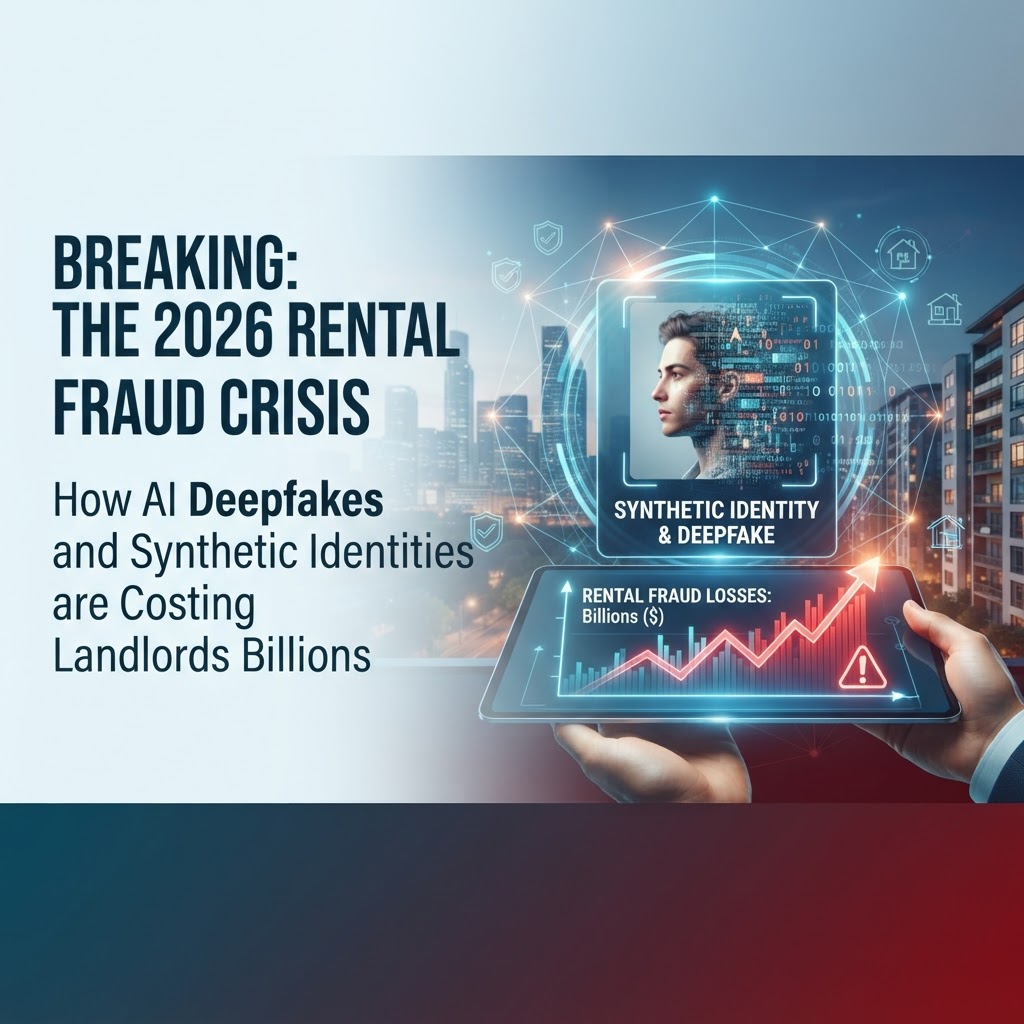
Executive Summary
The rental industry in 2026 is facing an unprecedented security crisis as generative AI tools have democratized sophisticated fraud. With 93% of rental housing providers reporting fraud attempts in the last year and AI-generated document forgery increasing by 500%, traditional screening methods have become obsolete. This report analyzes the economic impact of these trends and outlines the essential shift toward biometric and behavioral verification to safeguard global real estate assets.
The 2026 Fraud Tipping Point: A Digital Pandemic
The global rental market has entered a dangerous new era where identity theft and document forgery are no longer the exclusive domain of professional criminal syndicates. According to the latest industry data, a staggering 93.3% of respondents in the property management sector reported experiencing fraud in the previous 12 months (Source: Freedom Property Management). This is not merely a marginal increase; it is a fundamental shift in the risk landscape driven by the accessibility of high-end technology.
Bold Key Point 1: AI-generated document fraud saw a massive 500% increase between late 2025 and early 2026, rendering manual document inspection virtually useless for modern leasing teams (Source: Inscribe).
Bold Key Point 2: The financial impact is devastating, with large-scale operators facing an average of $4.2 million in annual bad debt directly linked to fraudulent applications (Source: Burnt).

As illustrated above, the complexity of digital verification in 2026 requires a multi-layered approach. The rise of "Social Media Fraud Classrooms" has empowered everyday applicants to use TikTok and Telegram tutorials to create flawless, yet entirely fake, financial histories (Source: Findigs). This democratization of deceit means that 1 in 8 rental applications now contains fraudulent income documentation (Source: Burnt).
The Mechanics of AI Forgery and Deepfakes
In 2026, the primary weapon of the fraudulent applicant is the AI-generated pay stub. These documents are no longer the crude, pixelated forgeries of the past. Modern AI tools can generate a convincing, mathematically accurate pay stub in under 60 seconds, complete with correct tax withholdings and employer branding (Source: Inscribe).
Highlighted Point: These AI-generated documents lack traditional forensic markers—such as font inconsistencies or metadata anomalies—that older detection tools were trained to identify, making them nearly invisible to the naked eye (Source: Inscribe).
Furthermore, the emergence of deepfake technology has compromised traditional video-call verification. Fraudsters are now using real-time face-swapping software to impersonate the individuals whose identities they have stolen, creating a "synthetic identity" that can pass basic visual checks. This has led to a doubling of first-party fraud in the last year alone (Source: LexisNexis).
The $65 Million Scam Wave: Economic Consequences
The Federal Trade Commission has reported that rental scams have hit a record high, with over $65 million in reported losses since the start of the decade, a figure that experts believe is significantly underreported (Source: FTC). For the individual landlord, the cost of a single mistake is catastrophic. The average cost of an eviction resulting from a fraudulent placement now ranges between $7,000 and $15,000 when legal fees, lost rent, and property damage are factored in (Source: Burnt).
Bold Key Point 3: High credit inquiry velocity has emerged as the top fraud risk indicator in 2026, with applicants who show a sudden burst of credit activity being significantly more likely to be utilizing synthetic identities (Source: TransUnion).
Bold Key Point 4: In high-demand markets like Los Angeles and Atlanta, the prevalence of fraud is even higher, with 93% of housing providers in these regions reporting identity theft as a primary concern (Source: Loebsack & Brownlee).

The image above represents the data-driven wall that property managers must build. Without standardized criteria and multi-layer identity verification, owners are essentially leaving their front doors unlocked. The 2026 market demands a shift from reactive to proactive protection.
Regional Hotspots and Regulatory Responses
California remains a primary target for sophisticated fraud rings. In markets like Long Beach and Orange County, competitive conditions create a desperate environment where applicants feel incentivized to falsify documents to secure housing (Source: BFPM Inc). This has led to a surge in altered bank statements and fabricated employment letters that are specifically tailored to bypass California's stringent tenant screening laws.
Highlighted Point: Professional property management firms are now integrating biometric verification tools as a standard requirement to combat the rise of synthetic identity fraud in these high-risk zones (Source: BFPM Inc).
Biometrics and Blockchain: The New Shield for 2026
To combat the AI-driven onslaught, Blacklist Global is advocating for the adoption of biometric-first screening. By requiring applicants to provide a live liveness check that is cross-referenced against government-issued IDs in real-time, the risk of deepfake impersonation is virtually eliminated.
Bold Key Point 5: Real-time fraud detection tools that monitor transactions across all payment channels can identify suspicious activity before the lease is even signed, saving thousands in potential legal costs (Source: ACAMS).
This technological shift is not just about security; it is about operational efficiency. By automating the verification of over 170 data points per applicant, property managers can reduce the time spent on manual reviews while simultaneously increasing their detection rate of fraudulent documents by up to 44% (Source: Findigs).
The Future of Global Rental Protection
As we look toward the remainder of 2026 and into 2027, the integration of blockchain-based identity lockers will likely become the next frontier. This would allow tenants to carry a verified, immutable digital identity that landlords can verify without ever needing to handle sensitive raw data, reducing the risk of data breaches and internal fraud.
Highlighted Point: Internal fraud remains a persistent threat, with heavy transaction volumes in large firms often masking unauthorized payments or document tampering (Source: ACAMS).
Key Takeaways for Property Owners in 2026
- Abandon Manual Review: AI can now create forgeries that are invisible to the human eye. Relying on manual checks is a multi-thousand dollar liability.
- Implement Biometrics: Live liveness checks are the only effective defense against the 2026 surge in deepfake identity fraud.
- Monitor Inquiry Velocity: Use advanced credit reporting to flag applicants with high inquiry bursts, a key indicator of synthetic identity use.
- Standardize Verification: Ensure every applicant passes through the same multi-layered digital gauntlet to maintain legal compliance and security.
- Partner with Experts: Companies like Blacklist Global provide the specialized infrastructure needed to stay ahead of the 500% increase in AI document forgery.
Protect your property today. The cost of prevention is a fraction of the cost of an eviction. Visit Blacklist Global to secure your 2026 rental strategy.
Tags
Published by
Blacklist Global