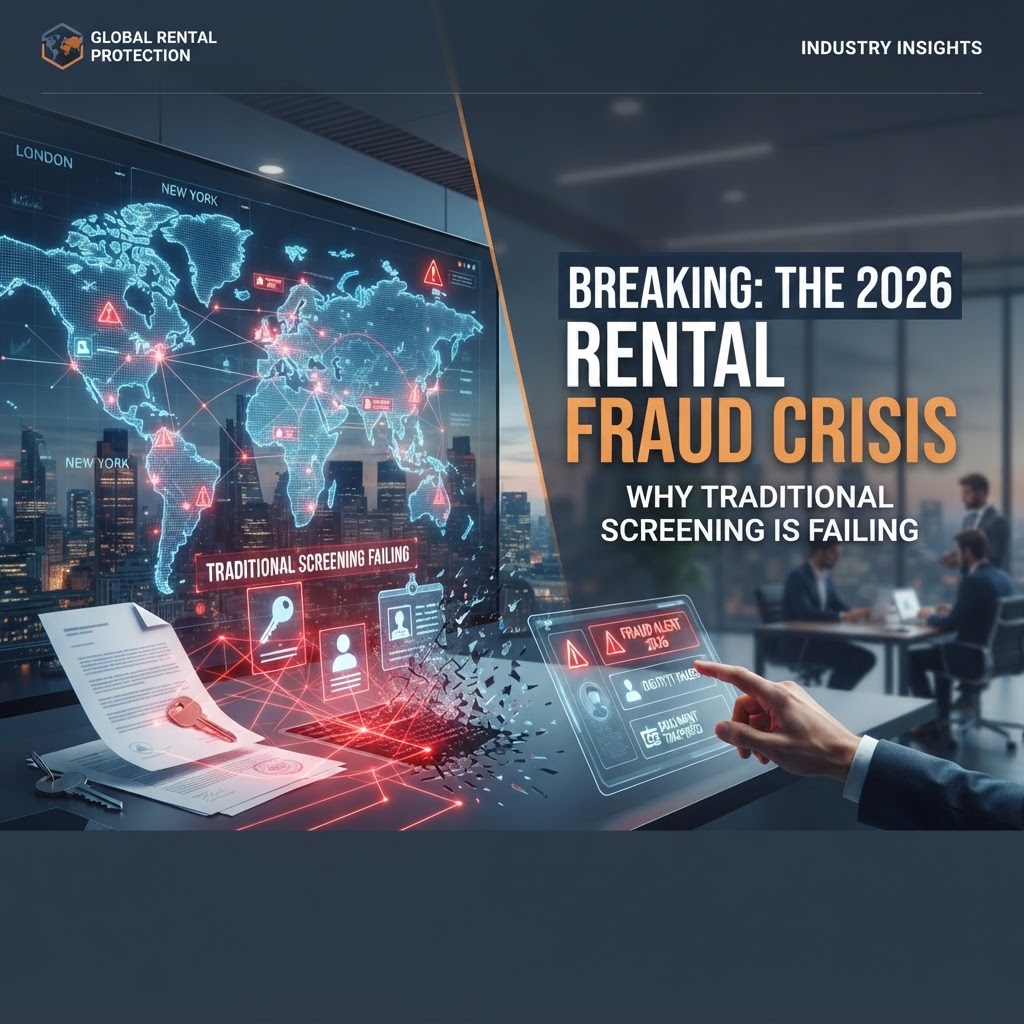
Breaking: The 2026 Rental Fraud Crisis - Why Traditional Screening is Failing
Executive Summary
Rental fraud has evolved into a sophisticated, high-stakes industry in 2026, with 93% of rental housing owners reporting at least one incident of fraud (Source: Burnt). As AI-generated document forgery increases by 500% year-over-year, property managers must shift from manual verification to multi-layered, AI-powered forensic screening to prevent catastrophic financial losses.
The 2026 Fraud Landscape: An Arms Race
The barrier to entry for fraudsters has collapsed due to the widespread availability of generative AI and online templates, turning rental application fraud into a high-volume, low-risk enterprise for criminals. Risk teams are now engaged in a relentless arms race against bad actors who use specialized software to create pay stubs and bank statements that are nearly impossible to detect via visual inspection (Source: Risk Management Magazine).
Explosive Growth in Fraud: AI-generated document fraud surged by 500% in 2025, and current data shows that 1 in 8 rental applications now contains fraudulent income documentation (Source: Burnt).
The Financial Toll: For large operators, unchecked fraud results in an average of $4.2 million in annual bad debt, while smaller landlords face costs ranging from $7,000 to $15,000 per eviction (Source: Burnt).

This image illustrates the shift toward granular, data-driven analysis. Property managers can no longer rely on trust-based systems; they must now employ digital footprint analysis and metadata verification to ensure the integrity of every applicant.
The Rise of AI-Powered Deception
Modern scammers are no longer just editing PDFs; they are utilizing "Fraud-as-a-Service" models to scale their operations. This includes the use of deepfakes and synthetic identities to bypass standard background checks.
Key Vulnerability: Scammers are increasingly targeting private landlords who lack the enterprise-grade verification tools used by large property management firms, often using fake payment confirmations to trick owners into releasing keys before funds are verified (Source: Mauzy Properties).
Multi-Layered Defense Strategies
To combat these threats, property owners must adopt a balanced strategy that integrates people, process, and technology. Relying on a single verification method is no longer sufficient in an era where document tampering is automated.
1. Advanced Document Forensics: Instead of reading the content of a document, modern tools analyze the "context" of how the file was created, including font consistency, metadata, and image inconsistencies (Source: Resistant AI).
2. Behavioral Risk Scoring: AI-driven risk scoring can detect patterns such as high credit inquiry velocity, which has emerged as a top indicator of potential rental application fraud (Source: TransUnion).

As shown above, the selection process is the most critical point of failure. By implementing automated screening, landlords can filter out high-risk applicants before they ever reach the lease-signing stage.
The Role of Professional Management
For many owners, the hidden cost of "saving" on management fees is far outweighed by the potential for a single fraudulent tenancy. Professional managers provide centralized communication, verified payment platforms, and legal compliance that significantly reduce the surface area for attacks.
Strategic Insight: Fraud rates are significantly higher in luxury segments, with homes costing over £10,000 per month seeing fraud rates up to 18 per 1,000 applications (Source: Property Industry Eye).
Protecting Your Investment
Beyond screening, landlords must ensure their insurance policies are robust enough to cover the specific risks of the 2026 market. Standard homeowners insurance is rarely sufficient for rental properties, and owners should seek specific landlord insurance that covers loss of rental income and liability (Source: Allstate).
This visual represents the necessity of a holistic protection strategy. Whether through insurance, AI-screening, or legal counsel, the goal is to ensure that a lease agreement does not turn into a long-term financial liability.
Key Takeaways
- Implement AI-driven document forensics that analyze file metadata rather than just visual content.
- Recognize that 1 in 8 applications contains fraudulent income data; verify all documents through third-party platforms.
- Shift to secure, verified payment systems to prevent "fake confirmation" scams that target private landlords.
- Review your landlord insurance policy annually to ensure it covers modern risks like loss of rent and liability, as standard policies often fall short.
Tags
Published by
Blacklist Global