
Breaking: AI-Driven Rental Fraud Skyrockets in 2026 as Global Losses Mount
Executive Summary
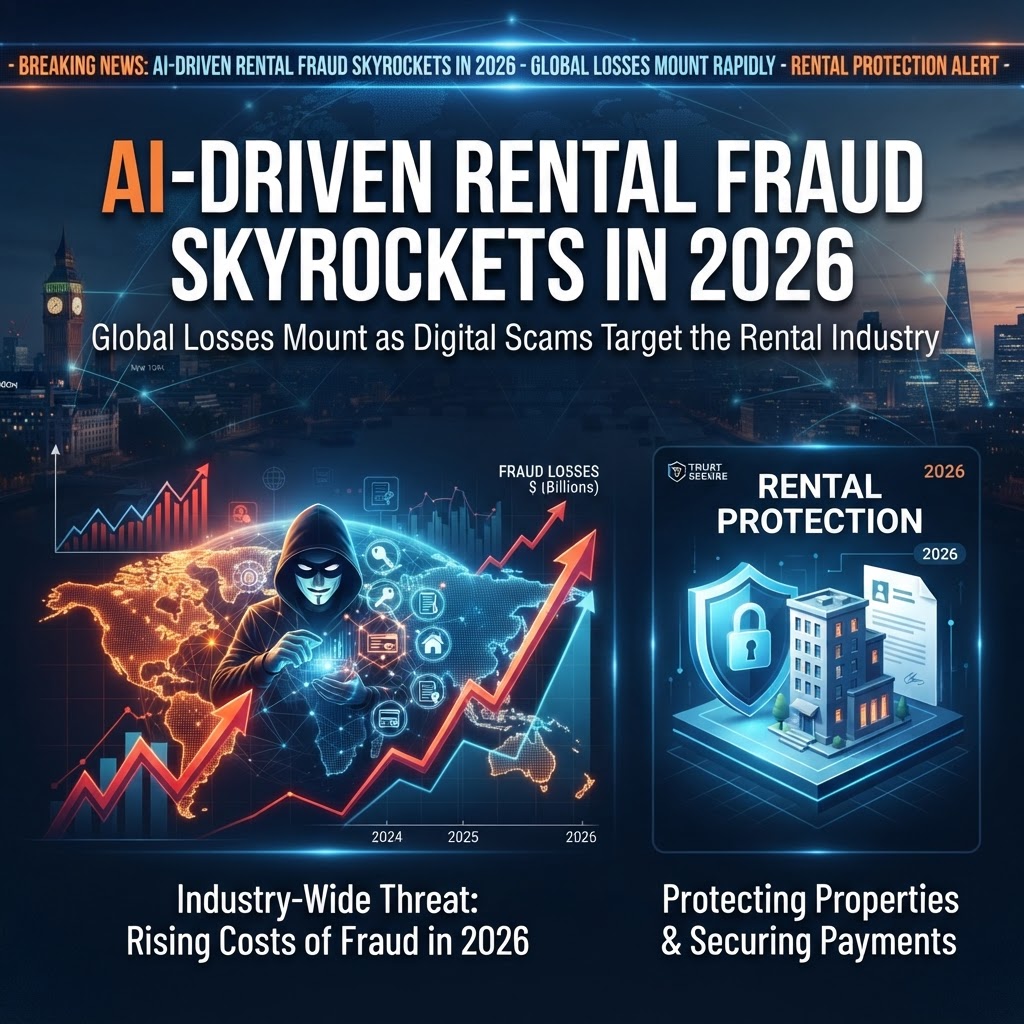
Global rental markets face an unprecedented integrity crisis as generative artificial intelligence democratizes sophisticated document forgery and synthetic identity fabrication. A shocking 1 in 8 rental applications submitted in 2026 now contains manipulated income verification or fraudulent identity profiles, according to leading industry benchmarks. As typical eviction and recovery expenses surge past $10,000 per fraudulent incident, legacy screening workflows have collapsed, forcing institutional and private landlords worldwide toward real-time biometric and direct-source rental protection ecosystems.
The New Wave: Generative AI Shatters Traditional Screening
The rental housing industry is facing an aggressive technological arms race. Fraud syndicates and opportunistic applicants no longer rely on crude image editing or flawed document scans. Instead, modern generative AI engines can fabricate pristine, mathematically sound pay stubs, W-2 forms, and altered bank statements in under sixty seconds.
Explosion in AI-Forged Records: Research indicates a 500% surge in AI-generated fraudulent documents entering leasing offices, with bad actors bypassing legacy metadata detectors. Source: Inscribe.
Epidemic Proportions Among Housing Providers: Upwards of 93% of rental housing operators report being targeted directly by sophisticated application falsification schemes within the last calendar year. Source: Burnt.

The fundamental issue stems from how generative neural networks operate: they construct original documents from blank canvasses rather than altering existing PDFs. Because older forensic screening systems were trained solely to flag metadata inconsistencies, mismatched fonts, or pixel shifts, AI-rendered financial statements glide through conventional screening pipelines without triggering automated alarms.
The Institutional Repercussions of Synthetic Profiles
Leasing teams are confronting synthetic identities—fictitious credit records constructed by combining genuine Social Security numbers with fictitious names and addresses. These identities allow unqualified or malicious actors to secure luxury leases under immaculate, unblemished profiles.
Systemic Financial Vulnerability: The fallout extends beyond mom-and-pop landlords. Enterprise portfolios and pension funds heavily invested in multifamily assets are seeing escalating bad debt, with enterprise operators incurring an average of $4.2 million in annual bad debt linked directly to fraudulent onboarding. Source: Burnt.
For institutional funds, when artificial tenant reliability leads to default, prolonged legal battles, and extensive physical damage, portfolio valuations plummet swiftly.
The Crippling Financial Fallout of Leases Turned Losses
When a fraudulent tenant secures occupancy, the financial and logistical hemorrhage compounds rapidly. Eviction backlogs in key metropolitan hubs now routinely span between four and eight months, leaving property owners to absorb lost revenue, soaring legal retainers, and repair costs.
Mounting Costs Per Event: Typical per-incident losses stemming from fraudulent tenant tenancy frequently climb above $10,000 to $15,000, accounting for months of unpaid rent, turnover cleanup, and legal fees. Source: National Apartment Association (NAA).
Consumer-Facing Collateral Damage: Between 2020 and 2026, renters have reported over $65 million in cumulative rental scam losses to federal authorities, highlighting that fraud syndicates actively exploit both sides of the transaction. Source: Federal Trade Commission (FTC).

The hidden expense of application fraud lies within administrative friction. When leasing consultants are forced to spend hours playing digital detectives—calling fake employers and cross-referencing shell company numbers—operational velocity stalls, depressing legitimate occupancy rates during competitive leasing seasons.
Global Events Fuel Transnational Vulnerabilities
High-demand international events exacerbate rental platform exposure. As massive influxes of international travelers flood host regions for global tournaments like the FIFA World Cup across North America, cross-border fraud reaches acute peaks.
Cross-Border Exposure: Scammers deploy fake rental listings, spoofed host identities, and hijacked credit lines to siphon deposits from foreign travelers while occupying short-term rentals under synthetic identities, escaping before chargebacks register. Source: Shufti Pro.
Without unified identity networks capable of cross-referencing multi-jurisdictional passports and international banking credentials, operators risk catastrophic chargeback exposure during peak travel cycles.
Beyond Manual Verification: The Layered Defense Framework
Human review is no longer a viable defense mechanism against AI-backed fraud. When human leasing agents review hyper-realistic documents during peak leasing periods, error rates climb dramatically. Forward-thinking property operators are overhauling their operational risk management models by deploying automated, layered screening architectures.
Direct-Source Financial Connectivity: Rather than accepting uploaded PDFs or image screenshots, modern platforms mandate direct, credentialed open-banking or payroll API connections to extract tamper-proof historical earnings and liquidity data.
Biometric Liveness Verification: Requiring prospective applicants to provide real-time facial biometric scans paired with encrypted government ID document checks eliminates stolen identity risks before key handoffs take place.
By unifying dynamic device fingerprinting, IP reputation scoring, and algorithmic liveness checks, rental providers eliminate manual bottleneck friction while slamming the door on bad actors.
Maintaining Compliance and Eliminating Bias
While automating fraud detection is mandatory in 2026, property operators must remain strictly aligned with Fair Housing Act guidelines and equal opportunity housing standards.
Algorithmic Transparency: Layered fraud tools must systematically separate fraud detection (identity and document tampering) from underwriting criteria (credit score and income multiples) to avoid discriminatory bias and regulatory non-compliance. Source: Risk Management Magazine.
By leveraging objective forensic flags—such as confirmed biometric mismatches or fraudulent routing tables—property teams defend against illegal discrimination allegations while systematically excluding malicious syndicates.
The Strategic Future: Comprehensive Rental Protection
Eliminating rental fraud requires more than reactive screening; it necessitates continuous portfolio protection. Leading organizations are pivoting away from unstandardized security deposits toward institutional rental guarantees and global blacklist databases that disincentivize fraudulent repeat offenders.
When properties partner with end-to-end rental protection platforms, bad-faith tenants lose the ability to jump from building to building undetected. Centralized verification networks flag previously defaulted synthetic identities across half a million residential units in real time, transforming fractured rental markets into unified, protected networks.
Key Takeaways
- AI Document Forgery Is the New Norm: Over 1 in 8 rental applications currently contains forged documentation, propelled by generative platforms that create flawless fake pay stubs in under a minute.
- The True Cost Exceeds $10,000: The combined expense of evictions, legal overhead, and bad debt averages $10,000 to $15,000 per incident, creating severe risk for landlords and institutional investors.
- Visual Inspection Is Obsolete: Traditional PDF checks and manual phone calls cannot catch synthetic profiles; screening must transition to direct-source payroll APIs and biometric liveness verification.
- Cross-Border Protection Is Vital: International events and cross-border short-term rentals require multi-layered global screening tools to safeguard inventory and prevent severe chargeback cascades.
- Blacklist Global Delivers Resilient Defense: Transitioning to modern rental protection networks ensures properties remain shielded against malicious operators while delivering a rapid, friction-free onboarding experience for trustworthy tenants.
Tags
Published by
Blacklist Global