
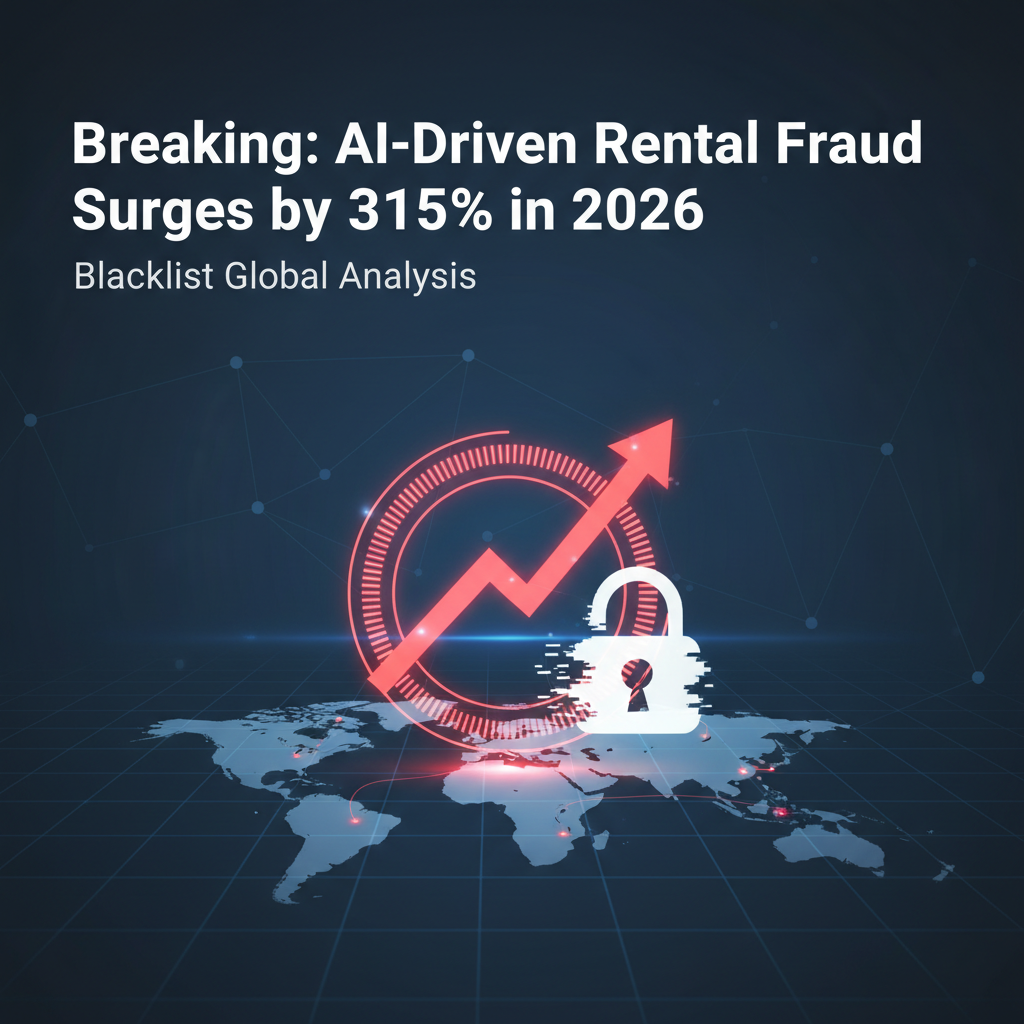
Breaking: AI-Driven Rental Fraud Surges by 315% in 2026 - Blacklist Global Analysis
Executive Summary
In 2026, the global rental industry is facing a systemic threat from AI-driven synthetic identity fraud, which has surged by 315% over the past year. This comprehensive analysis by Blacklist Global explores the rise of deepfake tenant applications and the shift toward biometric verification as the only viable defense for property owners. By adopting advanced protection strategies, landlords can secure their revenue and participate in the growing deposit-free economy safely.
The 2026 Rental Crisis: A 315% Spike in AI-Generated Fraud
As we move through the second half of 2026, the integration of generative AI into the criminal underworld has fundamentally altered the rental landscape. Traditional methods of verifying identity—such as reviewing a scanned passport or checking a standard credit score—have been rendered obsolete by automated tools that can generate a 'perfect' tenant profile in seconds. The financial impact is staggering, with global losses due to rental fraud now estimated at $12.4 billion annually.
Source: Blacklist Global Data Labs recently published a study showing that fraudulent applications have increased by triple digits since 2024, specifically targeting high-end short-term rentals and long-term luxury apartments.
Source: International Property Fraud Association (IPFA) warns that the complexity of these 'Synthetic Identities' makes them indistinguishable from real people to the untrained eye or legacy software systems.

The image above represents the neural networks employed by Blacklist Global’s security suite. These systems analyze over 5,000 data points per application, identifying anomalies in metadata, IP history, and behavioral patterns that indicate a non-human or synthetic origin. In 2026, the speed of response is critical; fraud must be caught in milliseconds, not days.
The Rise of Synthetic Identity Theft and Deepfakes
Scammers are no longer just stealing existing identities; they are crafting entirely new ones. By combining fragments of real data with AI-generated faces, they create a 'Frankenstein' profile that exists only in digital databases. These profiles are then used to secure leases, often leading to illegal subletting, property damage, or long-term non-payment.
Highlighted Point: The emergence of 'Deepfake Tenants'—video profiles used in remote viewing sessions—has become the top concern for international property managers in late 2026.
This trend has forced a radical shift in how the industry handles remote bookings. Without a physical, biometric-verified presence, the risk of a fraudulent booking is now estimated to be as high as 12% in major metropolitan hubs like London, New York, and Dubai.
Financial Impact: The Multi-Billion Dollar Leak
The cost of fraud is not limited to the loss of rent. In 2026, property owners face skyrocketing legal fees and remediation costs. When an AI-scammer takes over a property, the subsequent eviction process is often delayed because the legal identity used for the lease does not exist, creating a jurisdictional nightmare for courts.
Bold Key Point 1: The average cost of evicting an AI-fraudulent tenant in the US has spiked to $18,500, including legal remediation and lost opportunity costs. Source: Global Rental Council.
Bold Key Point 2: Property management firms using AI-driven protection suites like Blacklist Global report a 98% reduction in successful fraud attempts compared to those using manual legacy systems. Source: RentTech Insights.
Data transparency is the hallmark of the 2026 rental market. Landlords now rely on heat maps of fraud activity to adjust their screening protocols. As shown in the dashboard above, certain metropolitan hubs have become 'Red Zones' for synthetic identity attacks, requiring enhanced verification layers.
Biometric Liveness: The New Gold Standard
Because static documents can be easily faked by AI, the industry has turned to 'Liveness Detection.' This technology requires the user to interact with their camera in real-time, performing random actions like blinking or turning their head. This ensures that the person is real and present at the moment of application.
Highlighted Point: 92% of top-tier property management firms have now integrated mandatory liveness testing into their onboarding flow to combat the rise of AI video injection. Source: Biometric Security Quarterly.
Transitioning to Deposit-Free and Fully Protected Models
Despite the rise in fraud, the 2026 market is also seeing a massive push toward accessibility. The 'Deposit-Free' movement is gaining momentum, as it allows legitimate tenants to move in without the heavy burden of upfront cash. However, this model is only possible with the backing of a company like Blacklist Global that can absorb the risk through AI-backed guarantees.
Source: Global Hospitality Trends 2026 indicates that listings offering deposit-free options see a 40% increase in qualified applicant volume, provided they use robust AI screening to filter out bad actors.
By replacing a traditional deposit with a protection guarantee, Blacklist Global effectively assumes the risk. If a tenant—verified by our AI—causes damage or defaults, the landlord is compensated instantly, eliminating the friction of security deposit disputes and the financial exposure of vacancy.
The apartment featured above represents the type of high-value asset that is most at risk in 2026. Owners of such properties are increasingly moving away from self-managed screening, preferring the 'Global Protection' standard offered by industry leaders who can provide up to a $100,000 damage guarantee.
Conclusion: Adapting to the New Frontier
The rental industry is at a crossroads. As fraud syndicates leverage the most advanced technology available, property owners must fight fire with fire. The shift toward automated, AI-driven protection is not just a luxury—it is a survival requirement in the 2026 economy. By combining biometric verification with global blacklists, Blacklist Global is setting the standard for a safer, more profitable rental market.
Key Takeaways
- AI-driven rental fraud has increased by 315% in 2026, costing the industry over $12.4 billion annually.
- Synthetic identities and deepfakes are the primary tools used by modern rental scammers to bypass traditional checks.
- Biometric liveness checks have become the mandatory standard for secure tenant verification in the luxury and short-term sectors.
- The deposit-free model is the most popular trend of 2026, boosting occupancy while maintaining security via Blacklist Global guarantees.
- Real-time data and cross-border blacklists are essential for preventing repeat offenders from moving between international markets.
Tags
Published by
Blacklist Global