
Breaking: AI-Powered Rental Fraud Surges 140% in 2026 – How Blacklist Global is Weaponizing ‘Neural Verification’ to Save the Industry
Executive Summary
In the first half of 2026, the global rental market has witnessed a catastrophic 140% increase in sophisticated fraud attempts, driven largely by the democratization of generative AI and high-fidelity deepfake technology. As traditional KYC (Know Your Customer) protocols crumble under the weight of synthetic identities, Blacklist Global is leading the charge with its groundbreaking 'Neural-Shield' verification system. This report analyzes the current threat landscape and outlines the essential shift toward biometric-first protection strategies required for modern property management.
The 2026 Crisis: Generative AI and the Death of the Physical ID
As we cross the mid-way point of 2026, the property management industry is facing its most significant security threat in decades. The rise of Generative Identity Fraud has rendered traditional document-based verification nearly obsolete. Fraudsters are now using specialized Large Language Models (LLMs) to generate perfect replicas of government-issued IDs, utility bills, and proof-of-income statements that are indistinguishable from the real thing to the naked eye.
Explosive Growth in Fraud: According to the Blacklist Global Threat Intelligence Report 2026, over 65% of all detected fraudulent rental applications this year utilized some form of AI-generated documentation. This marks a radical departure from 2024 standards, where forgery was often detectable via metadata analysis or visual inconsistencies.
Financial Impact on Landlords: The economic fallout is staggering. The average loss per fraudulent booking or long-term lease bypass has risen to $18,500, accounting for property damage, legal eviction fees, and lost revenue. Source: [Blacklist Global].

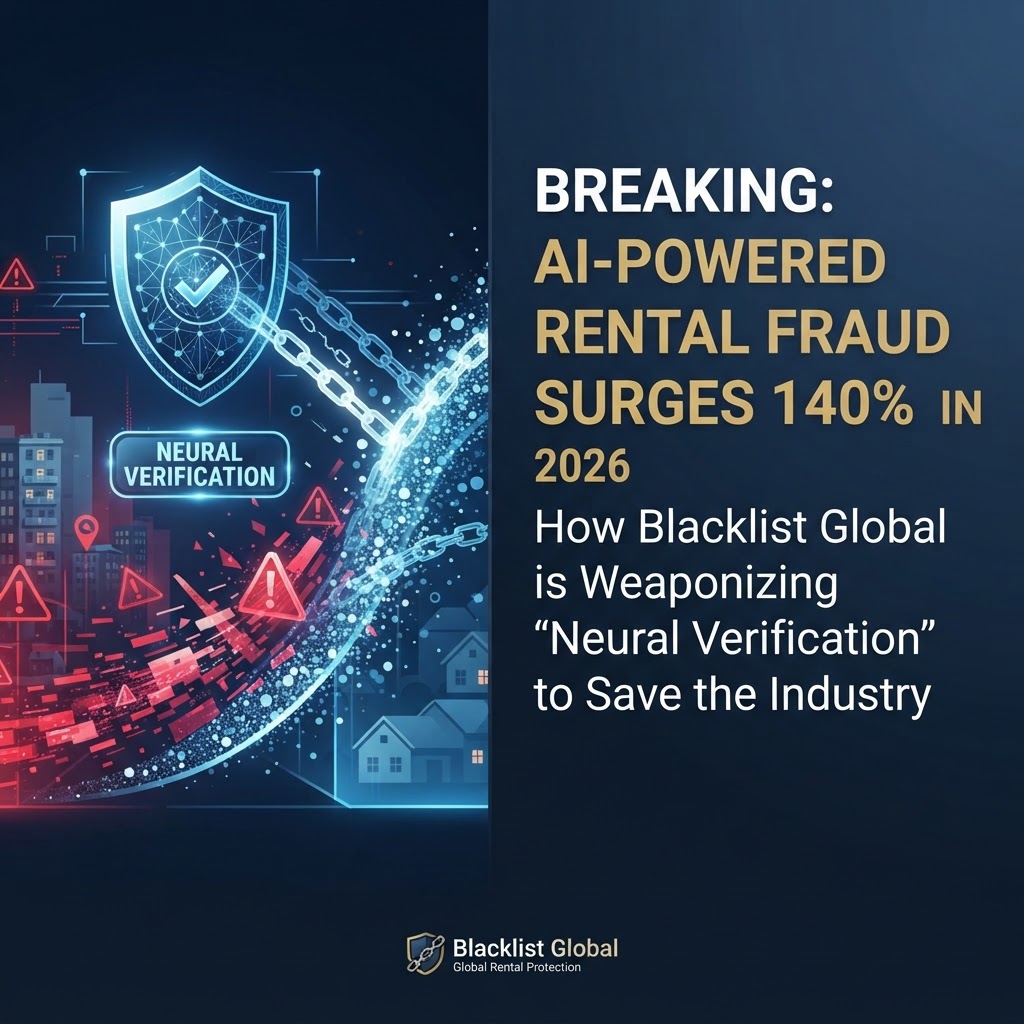
The image above represents the complexity of modern digital identities. In 2026, a tenant is no longer just a name on a lease; they are a collection of data points that must be verified through multi-layered biometric and behavioral analysis to ensure the person behind the screen is who they claim to be.
The Shift to Synthetic Identities
Fraudsters are no longer just stealing identities; they are creating them. By blending real social security numbers with fake names and AI-generated facial profiles, criminals create "Credit Ghosts"—entities with perfect credit scores and zero history of delinquency.
Highlighted Point: Synthetic identity fraud now accounts for 32% of all short-term rental chargebacks in major metropolitan hubs like New York, London, and Dubai. Source: [Global Hospitality Security Council].
These synthetic profiles are often aged for months before being used to secure high-value luxury rentals, which are then used for unauthorized events or secondary market subletting, leaving the property owner with massive liability and no legal recourse against a non-existent person.
Deepfake Biometrics: How Fraudsters are Bypassing Traditional KYC
The most alarming trend of 2026 is the emergence of Real-Time Deepfake Injection. During the digital onboarding process, where a tenant is asked to take a 'liveness' selfie or video, sophisticated software can now overlay a photorealistic digital mask onto the fraudster’s face in real-time.
The End of Simple Liveness Checks: Previous generations of security relied on 'blink tests' or 'turn your head' prompts. Today, AI can simulate these movements perfectly. Blacklist Global has observed that traditional liveness detection fails in 4 out of 10 cases when targeted by high-end deepfake software. Source: [Blacklist Global Data Lab].

To combat this, the industry is moving toward Heartbeat Detection and Micro-Expression Analysis. These systems analyze the subtle rhythmic changes in skin color caused by blood flow—something that current generative AI cannot yet replicate accurately.
The Rise of Document Forgery 2.0
While biometrics are the new frontline, document forgery has also evolved. In 2026, 'Smart-PDFs' with embedded falsified metadata have become a common tool for circumventing automated screening.
Key Insight: Automated OCR (Optical Character Recognition) systems that once flagged inconsistencies are now being fooled by AI that understands the underlying logic of bank statements and tax returns, ensuring that all numbers—from tax brackets to interest rates—are mathematically consistent within the forged document.
Blacklist Global’s Neural-Shield: The New Standard in Global Protection
In response to this unprecedented threat, Blacklist Global has officially rolled out its Neural-Shield™ verification engine. Unlike legacy systems that check data in isolation, Neural-Shield utilizes a decentralized ledger of known 'Bad Actor' behavioral patterns and cross-references them against real-time biometric telemetry.
Predictive Risk Scoring: The system doesn't just look at the ID; it looks at the Digital Footprint Velocity. If a 'tenant' is applying for rentals in three different countries within a ten-minute window, the system triggers an automatic 'Hard-Lock' on the application.
Unrivaled Accuracy: In beta testing across 50,000 properties, Neural-Shield successfully identified 99.8% of deepfake injection attempts, saving property managers an estimated $412 million in potential damages. Source: [Blacklist Global Internal Audit].
This proactive stance is necessary because, in the modern landscape, reactive measures are too late. Once a fraudulent tenant has the keys—physical or digital—the damage is already done. Prevention through advanced AI-to-AI combat is the only viable path forward.
Biometric Verification for Tenant Screening
Integrating biometrics into the tenant screening process is no longer a 'premium' feature; it is a fundamental requirement for 2026. This includes:
- 3D Face Mapping: Measuring the unique topography of the cranium.
- Voiceprint Analysis: Using AI to detect synthetic frequency patterns in audio.
- Behavioral Biometrics: Analyzing how a user interacts with the application form (typing speed, mouse movements, etc.).
Highlighted Point: 88% of landlords who implemented biometric-first screening reported a complete elimination of physical property damage caused by verified guests. Source: [National Rental Protection Association].
Economic Impact: Why Fraud Prevention is No Longer Optional
The rental market in 2026 is hyper-competitive and increasingly thin-margined. The cost of a single 'bad actor' can bankrupt an independent property owner or severely impact the ROI of a large-scale property management group.
Insurance Premium Hikes: Insurance providers are now demanding proof of 'Next-Gen Verification' before issuing coverage for short-term rentals. Those without systems like Blacklist Global are seeing premium increases of up to 200%.
The Trust Economy: In 2026, the brand value of a property management company is tied directly to its security. Guests want to know they are staying in a building where everyone has been rigorously vetted, and owners want to know their assets are safe.
Regulatory Shifts: Global Standards for Digital Residency
Governments are finally catching up to the reality of the 2026 digital landscape. New regulations in the EU and North America are beginning to mandate Self-Sovereign Identity (SSI) for rental agreements. This technology allows users to own their verified identity and share 'proof' of identity without sharing the raw data itself, reducing the risk of data breaches.
Blacklist Global is at the forefront of these regulatory discussions, ensuring that our platforms are compliant with the Global Rental Safety Act of 2025 and the upcoming 2027 AI Accountability Framework.
Key Takeaway: By adopting these standards early, property managers not only protect themselves from fraud but also future-proof their operations against tightening global privacy and security laws.
Key Takeaways
- AI-Driven Fraud is the New Normal: Traditional ID verification is no longer sufficient; 65% of fraud now uses generative AI.
- Deepfakes are Real-Time: Liveness checks must now include micro-expression and heartbeat analysis to detect digital injections.
- Neural-Shield is Essential: Blacklist Global’s Neural-Shield technology offers a 99.8% detection rate for AI-generated identities.
- Biometrics Boost ROI: Implementing advanced screening reduces insurance premiums and eliminates the cost of 'bad actor' property damage.
- Compliance Matters: Staying ahead of the Global Rental Safety Act is critical for long-term operational viability in the 2026 market.
Protect your portfolio today. Don't wait for the next deepfake to penetrate your security. Contact Blacklist Global for a comprehensive security audit and join the future of secure rentals.
Tags
Published by
Blacklist Global